
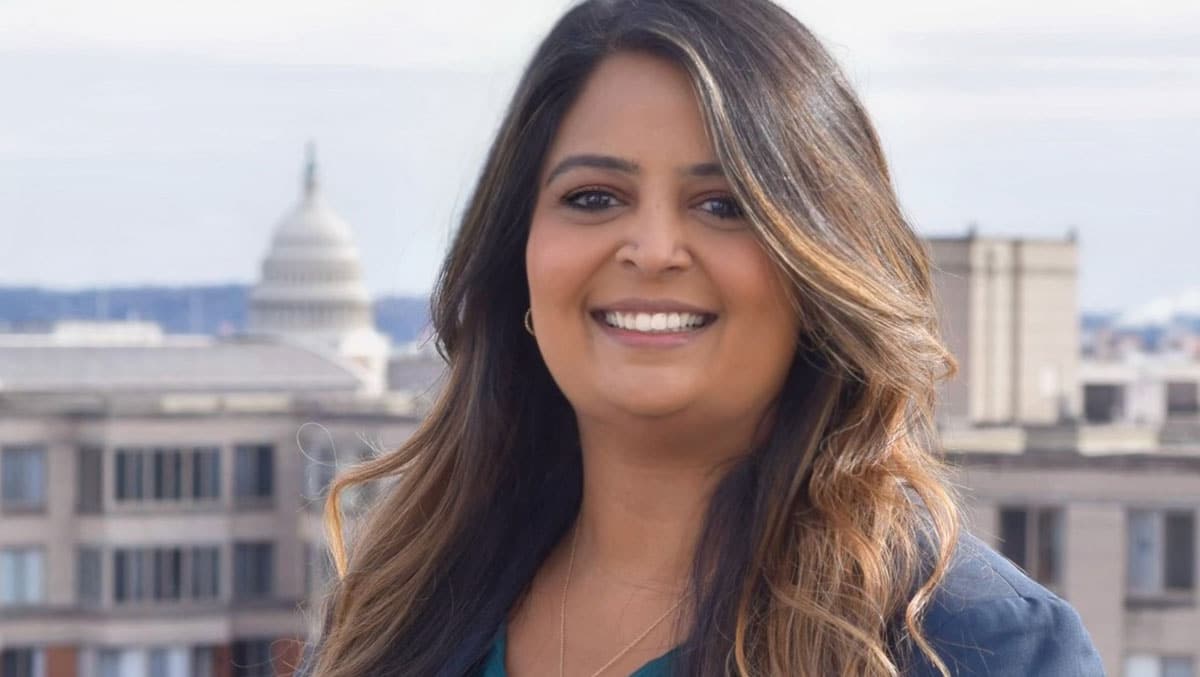
Tarika Aggarwal, 30
Tarika Aggarwal shapes communications strategies for national security agencies confronting high-stakes chemical, biological and nuclear threats.
When threats to the nation are at their most severe — as in the case of chemical, biological, radiological and nuclear (CBRN) attacks — communications clarity isn’t just strategic, it’s mission critical; and Tarika Aggarwal helps ensure America’s security military leaders get it right.
“My goal is to be the person leaders turn to when the stakes are high, the issues are complex, and the path forward is not obvious. By supporting leadership at the Department of War, we ensure they have the best courses of action and people behind them to make a difference in national security.” Tarika Aggarwal
As a communications expert at the nonprofit corporation ANSER, she supports the Deputy Assistant Secretary of War for CBRN Defense Programs with enterprise-wide communications strategies around national security and defense priorities. “There’s an increased interest in the biodefense space, and we help the warfighter increase their operational readiness — making sure they have the right capabilities at the right place and time,” she explains. Aggarwal has distinguished herself in this work: She was selected for ANSER’s inaugural Leadership Legends program, which recognizes and trains emerging leaders for future roles. Although this was not the career path she originally envisioned for herself when she enrolled at Drexel, three co-op experiences at Lockheed Martin inspired her. There, she was entrusted to synthesize leadership imperatives and share them with both technical and executive audiences. That led her to support top-level executives at the Defense Advanced Research Projects Agency (DARPA). The co-op experience “was a good kickstart into the defense space,” she says. “I was able to immerse myself in an array of communications fields and figure out what I enjoy doing. And once I graduated, the training wheels were off. I was ready to go.”
In her own words…
My Greatest Accomplishment:
I served on the core planning team that orchestrated a head of state visit to our office during an official trip to the United States. In about two weeks, our team tracked all the moving pieces, from a technology showcase to logistics and coordination with external partners, but my key role was to draft the remarks delivered by the director to the visiting president. Being the center of communication between the agency’s leadership and a head of state, and watching the visit land exactly as intended, will forever be one of the defining highlights of my career.
How Drexel Shaped My Path:
Drexel helped changed what I thought my career could look like. I spent all three of my co‑ops at Lockheed Martin, and I liked the work so much that I stayed on part‑time while in school and poured every free hour into my work, while obtaining two degrees. I was surrounded by scientists and engineers who were excited about changing the future, and by mentors who invested in me. Drexel didn’t just help me secure a job; it introduced me to an environment that sparked my interest in innovation and expanded how I saw my future.
Where I Hope To Be in Five Years:
I see myself continuing to serve as a trusted adviser to senior leaders, helping them navigate tough, yet impactful decisions. I want to keep sharpening my skills as a communicator and strategist so I can give them the tools, context and language they need to operate under pressure. I hope my work continues to help decision-makers protect our country and the military communities we serve. DM


