
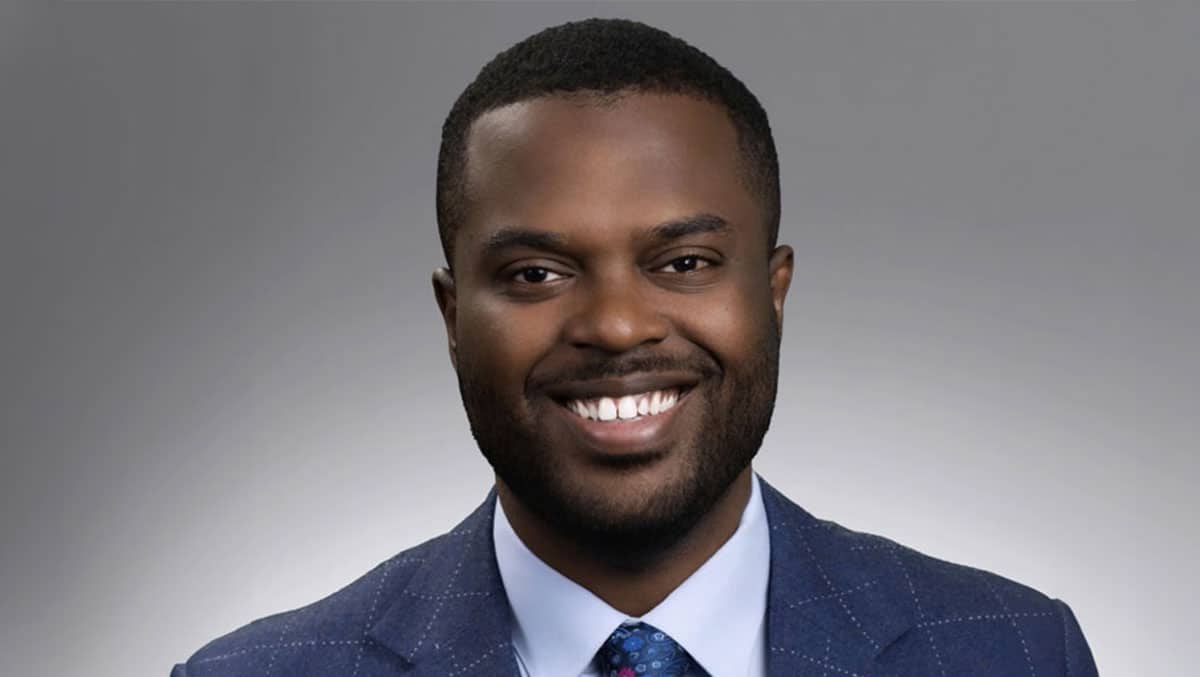
Samuel Cook, 33
From the Bronx to the U.S. Senate, Samuel Cook has built a career in medicine defined by service, advocacy and expanding equity in care.
The path that Samuel Cook, MD, took to a medicine career was rooted in his early life in the Bronx, where he was raised by a family committed to service. “My two loving parents instilled in me a deep love of God and the impetus to serve those who are most in need,” he says. That dedication defined his direction in life. From his early training to his current role as a hospitalist and nocturnist at Sanford Bemidji Medical Center in Bemidji, Minnesota, Cook has focused on caring for underserved communities in every city along the way: Philadelphia; Washington, D.C.; Atlanta; and now, rural Minnesota. He’s a graduate of the College of Medicine’s Drexel Pathway to Medical School (DPMS) program, a one-year master’s degree that gives students personally impacted by health care disparities, socioeconomic or educational barriers acceptance into Drexel’s MD program. There, he distinguished himself both academically and through service, earning the Student Achievement Award in Medical Genetics and the Mary Ellen Hartman Award for Outstanding Social Consciousness and Leadership. Within a year of earning his medical degree, the COVID-19 pandemic arrived, and Cook helped lead vaccination efforts in Washington, D.C. As director of the Faith in Vaccines initiative, he partnered with the Mayor’s Executive Team and the District of Columbia Department of Health to coordinate clinics in the city’s most medically underserved wards. The district government later commissioned him to author a regional playbook outlining strategies to reach vulnerable populations. During his residency at Morehouse School of Medicine in Atlanta, he became a national advocate for equity in health care.
“The doctors I saw as a child never looked like me, so I made it my life’s mission to be the change I sought in medicine. Cultural competence directly saves our patients’ lives and well-being.” Samuel Cook
He has twice testified before the U.S. Senate Committee on Health, Education, Labor and Pensions about the shortage of Black physicians in the American workforce and steps Congress could take to address it, emphasizing the impact of programs like Drexel’s Pathway to Medicine. “I would not be where I am today without the exceptional guidance I received at this institution,” he says. In 2025, Drexel’s Alumni Association honored Cook with the Emerging Leader Award. This year, he joined the College of Medicine’s Alumni Board to help guide the next generation of Drexel physicians.
In his own words…
My Greatest Accomplishment:
Serving as an advocate for medical professionals, trainees and patients of color — in particular, the two times I was called upon to testify before the U.S. Senate. These Senate hearings highlighted the plight of underrepresented populations in every facet of medical practice, acknowledging that greater representation helps to strengthen physician-patient therapeutic alliances, establish trust and yields significantly improved patient outcomes.
How Drexel Shaped My Path:
I firmly believe that the spirit of Drexel lives within its graduates and the legacies they create. I am a proud graduate of the Drexel Pathway to Medical School program and the College of Medicine. In my Senate hearings, and throughout my early medical career, I proudly recounted my time training at Drexel. To name a few of my key influences: Drs. Leon McCrea and Michael Weingarten and Professor Bradford Jameson were all strikingly impactful during my training.
Where I Hope To Be in Five Years:
My greatest hope is to be doing even more to enrich the communities I serve. I especially aspire to continue opening doors for students and medical trainees from underrepresented backgrounds. For those who, like I, never had a physician of color growing up, attaining a career in medicine can seem like a never-ending series of insurmountable hurdles. Among other factors, this is due to a historical lack of representation, funding, guidance and encouragement. My primary aim has always been to become the change I seek, and so, I will continue to work to help bridge these gaps and create sustainable equity in medicine. DM


