



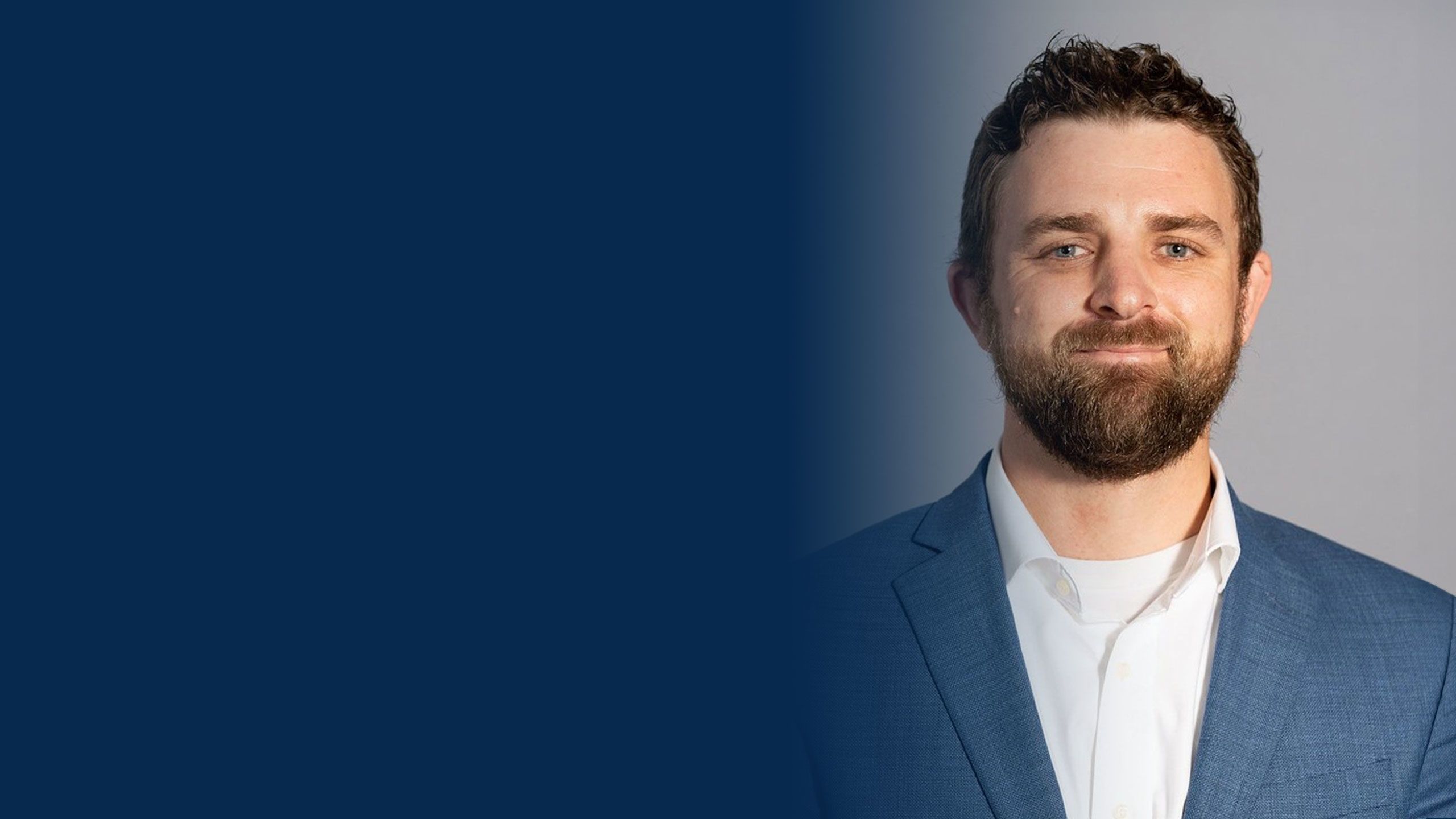
Edwin McCulley, 36
BS health sciences ’18, MS epidemiology ’20, PhD epidemiology '25
ASSOCIATE PRINCIPAL SCIENTIST IN EPIDEMIOLOGY, MERCK

Edwin McCulley, 36
BS health sciences ’18, MS epidemiology ’20, PhD epidemiology '25
ASSOCIATE PRINCIPAL SCIENTIST IN EPIDEMIOLOGY, MERCK

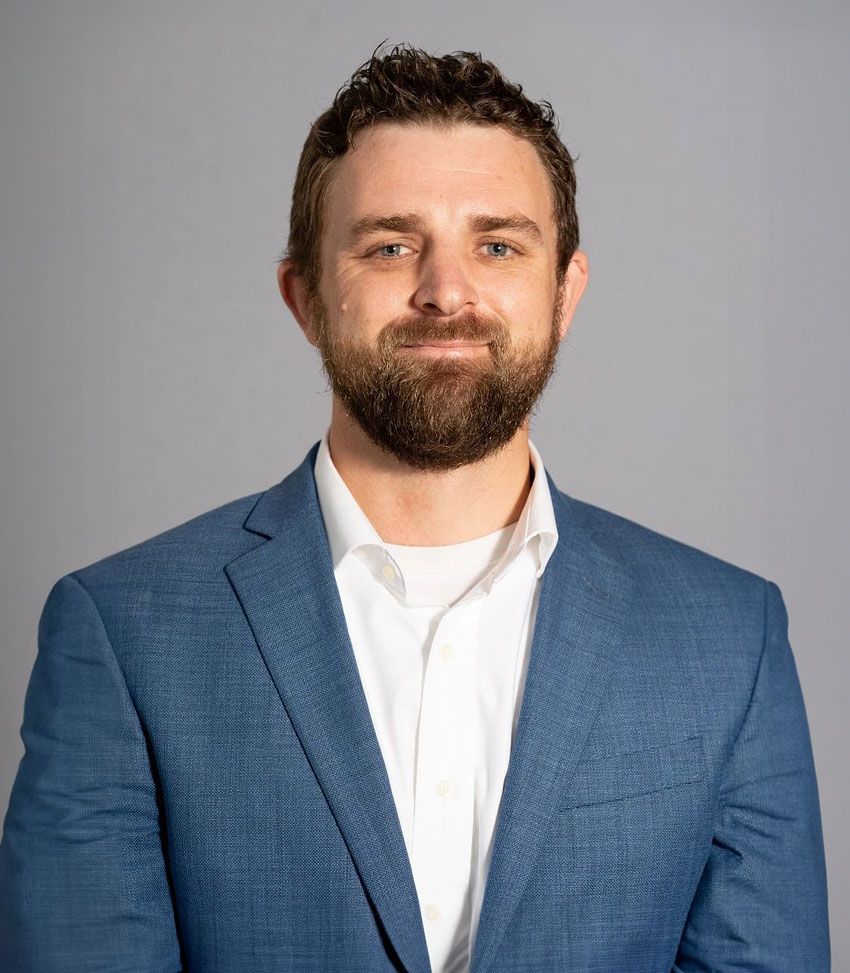
Edwin McCulley translates large-scale health data — from pandemic tracking to drug development — into evidence that guides real-world outcomes.
So much of epidemiology looks like just … statistics. But those statistics have human impacts. “Good evidence and robust science should inform better decisions and better outcomes for people,” says Edwin McCulley. As a student during the COVID-19 pandemic, he put that into practice early on. He had just finished his Master of Science and taken a position as a research coordinator, working with health departments from 30 of the largest U.S. cities. The goal was to streamline the collection and analysis of COVID-19 data, to help cities plan their pandemic response. “We were looking at things like infection rates and disparities in outcomes, so that the health professionals could make better decisions moving forward,” he says. A U.S. Navy veteran, McCulley now works with Merck, serving as a subject-matter expert supporting clinical development, regulatory strategy and real-world evidence across multiple therapeutic areas. His work spans industry, public health practice and civic service, and he has earned recognition for mentoring, teaching excellence and leadership. He credits his time in the Navy with giving him a strong sense of responsibility and service, and says that epidemiology gives him a way to apply that mindset through science.
“I’m very motivated by complex problems in the realm of the health science, especially when the work helps translate large amounts of complex data into something that improves how healthcare decisions are made.”
His time at Drexel helped to set him up for success. With strong support for military veterans, Drexel helped shape his approach to problem-solving: His academic training emphasized applied research, the importance of translating research into real-world outcomes. Exposure to collaborative research teams — and mentorship from Dornsife School of Public Health professors of epidemiology such as Usama Bilal and Gina Lovasi — helped him to get comfortable with working across disciplines and communicating complex ideas clearly. “That experience really made the transition into industry much more natural, because the focus was always on producing work that was both rigorous and useful in real-world settings,” he says.


In his own words…
My Greatest Accomplishment:
Building a career defined by disciplined service, scientific rigor and real-world impact across government, academia and industry. As a U.S. Navy Veteran and epidemiologist, I’ve led and contributed to research that translates complex health data into evidence that supports decision-making in population health and clinical research. Most recently, my work has focused on real-world evidence and pharmacoepidemiology, with an emphasis on producing results that are both methodologically sound and practically useful.
How Drexel Shaped My Path:
By strengthening the way I think — rigorously, critically and with a clear focus on impact. The program sharpened my ability to design strong epidemiologic studies, communicate findings clearly and work across disciplines to solve complex problems. Just as importantly, Drexel reinforced my commitment to evidence-based decision-making. The mentorship and training I received gave me the confidence and technical foundation to succeed in fast-paced, high-stakes environments including my current work in the pharmaceutical industry.
Where I Hope To Be in Five Years:
I hope to be leading high-impact real-world evidence programs that shape clinical strategy, regulatory decision-making and population health. I want to continue growing into roles where I can set scientific direction, mentor teams and drive evidence generation across therapeutic areas. My long-term goal is to bridge rigorous epidemiologic methods with practical decision needs, ensuring that complex data is translated into clear, actionable insight. Ultimately, I aim to be recognized as a trusted scientific leader who delivers results that drive innovation and improve health at scale. DM


In his own words…
My Greatest Accomplishment:
Building a career defined by disciplined service, scientific rigor and real-world impact across government, academia and industry. As a U.S. Navy Veteran and epidemiologist, I’ve led and contributed to research that translates complex health data into evidence that supports decision-making in population health and clinical research. Most recently, my work has focused on real-world evidence and pharmacoepidemiology, with an emphasis on producing results that are both methodologically sound and practically useful.
How Drexel Shaped My Path:
By strengthening the way I think — rigorously, critically and with a clear focus on impact. The program sharpened my ability to design strong epidemiologic studies, communicate findings clearly and work across disciplines to solve complex problems. Just as importantly, Drexel reinforced my commitment to evidence-based decision-making. The mentorship and training I received gave me the confidence and technical foundation to succeed in fast-paced, high-stakes environments including my current work in the pharmaceutical industry.
Where I Hope To Be in Five Years:
I hope to be leading high-impact real-world evidence programs that shape clinical strategy, regulatory decision-making and population health. I want to continue growing into roles where I can set scientific direction, mentor teams and drive evidence generation across therapeutic areas. My long-term goal is to bridge rigorous epidemiologic methods with practical decision needs, ensuring that complex data is translated into clear, actionable insight. Ultimately, I aim to be recognized as a trusted scientific leader who delivers results that drive innovation and improve health at scale. DM

 Built with Shorthand


